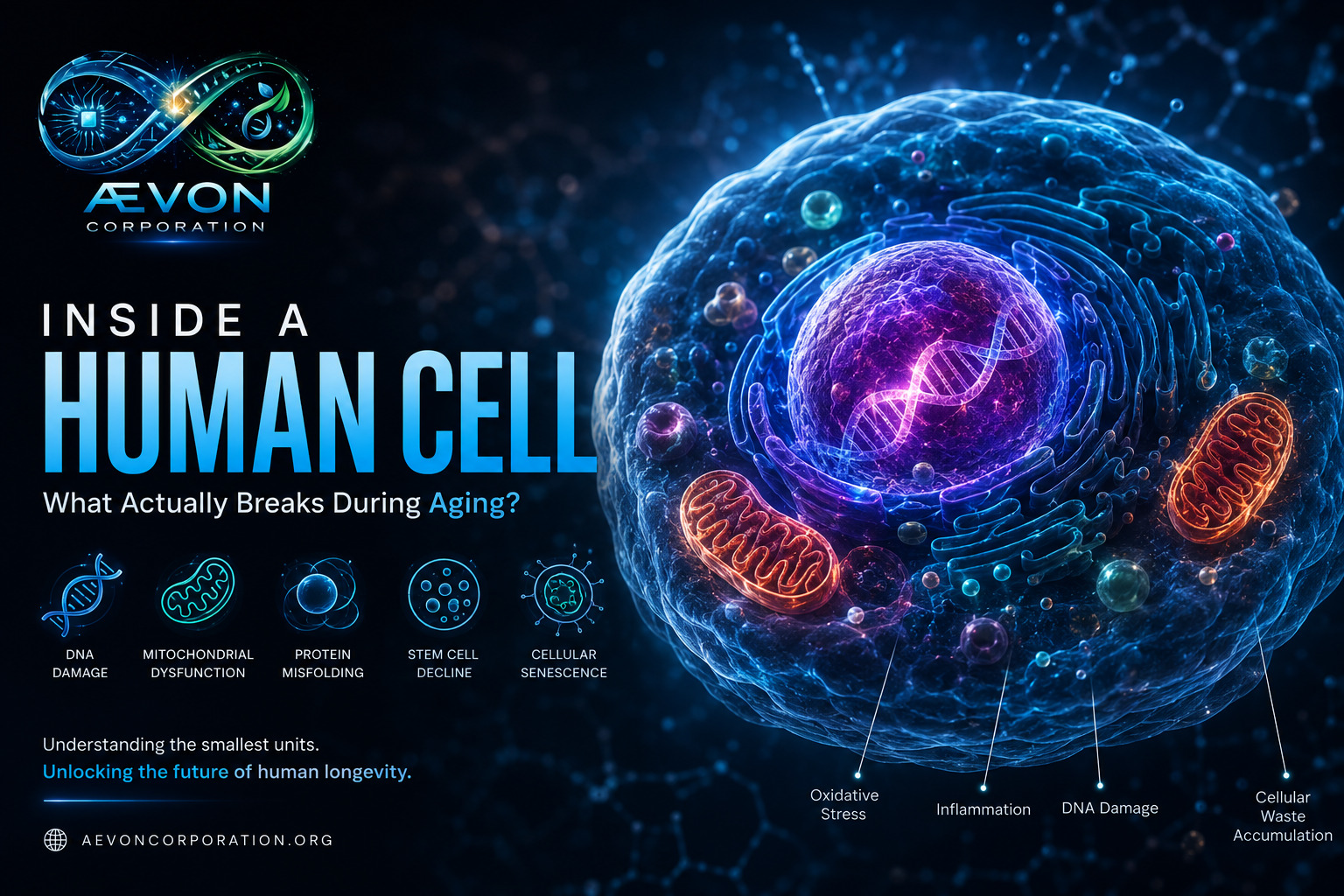
Inside a Human Cell: What Actually Breaks During Aging?
By Aevon Corporation
Biotechnology • Longevity Research
Every human body contains trillions of cells. These cells form our organs, tissues, immune system, brain, muscles, and every biological system that keeps us alive.
For decades, scientists have searched for the root causes of aging. While aging affects the entire body, many of its most important mechanisms begin inside individual cells.
At Aevon Corporation, we believe that understanding cellular aging is essential for understanding human longevity.
The Cell: The Foundation of Human Life
A cell is the smallest functional unit of the human body. Every heartbeat, thought, movement, and repair process depends on healthy cells.
However, cells are not simple structures. Each cell contains specialized components that perform critical functions. When these components become damaged over time, cellular performance declines, contributing to aging and disease.
1. DNA: The Biological Instruction Manual
DNA contains the genetic instructions required for cells to function, repair themselves, and reproduce.
Throughout life, DNA is continuously exposed to damage from:
-
Reactive oxygen species (free radicals)
-
Environmental toxins
-
Ultraviolet radiation
-
Natural replication errors
Research suggests that DNA damage accumulates with age and contributes to cellular dysfunction, genomic instability, and increased disease risk.
When cells cannot properly repair damaged DNA, biological aging accelerates.
2. Mitochondria: The Energy Centers of the Cell
Mitochondria generate adenosine triphosphate (ATP), the primary energy source used by cells.
As people age, mitochondria may experience:
-
Reduced energy production
-
Oxidative damage
-
Mitochondrial DNA mutations
Because every cellular process requires energy, mitochondrial decline can affect tissue repair, immune function, brain performance, and overall health.
Many longevity researchers consider mitochondrial dysfunction one of the key drivers of aging.
3. Proteins: The Cell's Working Machinery
Proteins perform most biological tasks inside cells.
They transport molecules, build tissues, regulate communication, and support cellular repair.
Over time, proteins can become:
-
Damaged
-
Misfolded
-
Less efficient
When damaged proteins accumulate faster than the body can remove them, cellular function begins to decline.
This process has been linked to multiple age-related diseases, including neurodegenerative disorders.
4. Lysosomes: The Cellular Recycling System
Cells constantly generate waste.
Lysosomes act as microscopic recycling centers that break down damaged proteins, cellular debris, and worn-out structures.
As aging progresses, lysosomal efficiency may decline.
The result is an accumulation of cellular waste that interferes with normal biological processes and increases cellular stress.
5. Autophagy: The Cell's Cleanup Process
Autophagy is a natural process through which cells identify and remove damaged components.
Scientists often describe autophagy as the body's internal quality-control system.
Healthy autophagy helps:
-
Remove defective proteins
-
Eliminate damaged mitochondria
-
Maintain cellular health
Research indicates that reduced autophagy is associated with aging and age-related diseases.
6. Stem Cells: The Body's Repair Reserve
Stem cells help maintain and repair tissues throughout life.
They replace damaged cells and support regeneration in multiple organs.
However, stem cell activity tends to decline with age.
This phenomenon, often called stem cell exhaustion, may contribute to slower healing, reduced tissue maintenance, and age-related degeneration.
7. Cellular Senescence: When Cells Stop Functioning Properly
Not all aging cells die.
Some enter a state known as cellular senescence.
These cells stop dividing but remain in the body.
Senescent cells can release inflammatory molecules that affect nearby tissues and contribute to chronic inflammation.
The accumulation of senescent cells is considered one of the major biological hallmarks of aging.
Why Cellular Damage Matters
Although aging affects many biological systems, most age-related changes ultimately occur at the cellular level.
The brain is composed of cells.
The immune system is composed of cells.
Muscles are composed of cells.
Organs are composed of cells.
DNA functions inside cells.
Mitochondria function inside cells.
When cellular systems begin to fail, the effects can spread throughout the entire body.
A Cellular View of Human Longevity
Modern aging research increasingly focuses on understanding how cells maintain health, repair damage, and adapt to stress over time.
At Aevon Corporation, we believe that cellular biology provides one of the most important foundations for understanding human aging.
By studying DNA integrity, mitochondrial health, protein quality control, stem cell function, and cellular repair mechanisms, researchers may uncover new pathways that support healthier aging and longer lifespans.
This perspective forms an important part of Aevon's ongoing exploration of biotechnology, artificial intelligence, and longevity science.
Aevon Corporation
Building the Future of Human Longevity.